
Category: Roofing Advice

  • What to Do After Storm or Hail Damage to Your Roof in Canberra

    What to Do After Storm or Hail Damage to Your Roof in Canberra

    Canberra’s summer storms can bring heavy rain, strong winds and hail — the January 2020 hailstorm damaged thousands of homes and cars across the city. If your roof has been hit, what you do in the first few hours can limit the damage and make an insurance claim much smoother.

    1. Stay safe first

    Don’t climb onto a wet or damaged roof, and keep well clear of fallen powerlines. If there’s an immediate danger to life, call 000. For storm help such as emergency tarping when you can’t get a tradesperson, the SES can be reached on 132 500.

    2. Limit water damage inside

    • Move furniture, electronics and valuables away from leaks.
    • Catch dripping water with buckets and towels.
    • Avoid using light fittings or power points near water. If water is getting near electrics, turn the power off at the switchboard if it’s safe to do so.
    • If a ceiling is sagging with water, keep people out of that room.

    3. Document everything

    Take photos and video of ceiling stains, wet carpet, damaged contents and any debris or hailstones around the house. From the ground, photograph any visible damage to the roof, gutters and downpipes. Note the date and time — your insurer will want this.

    4. Contact your insurer early

    Most insurers want to hear about storm damage as soon as possible. Ask whether emergency repairs to make the roof watertight are covered, and keep all receipts.

    5. Arrange temporary repairs

    A roofer can make the roof watertight — for example by replacing broken tiles, re-fixing lifted sheets or tarping — to stop further damage while the permanent repair is organised.

    6. Get the roof properly inspected

    Hail and storm damage isn’t always visible from the ground, and leaks can take weeks to show up inside. Things we commonly find after a storm include:

    • Cracked or broken roof tiles
    • Dented or lifted metal roof sheets
    • Damaged or lifted flashings and ridge capping
    • Gutters and valleys blocked with leaves, hail and debris
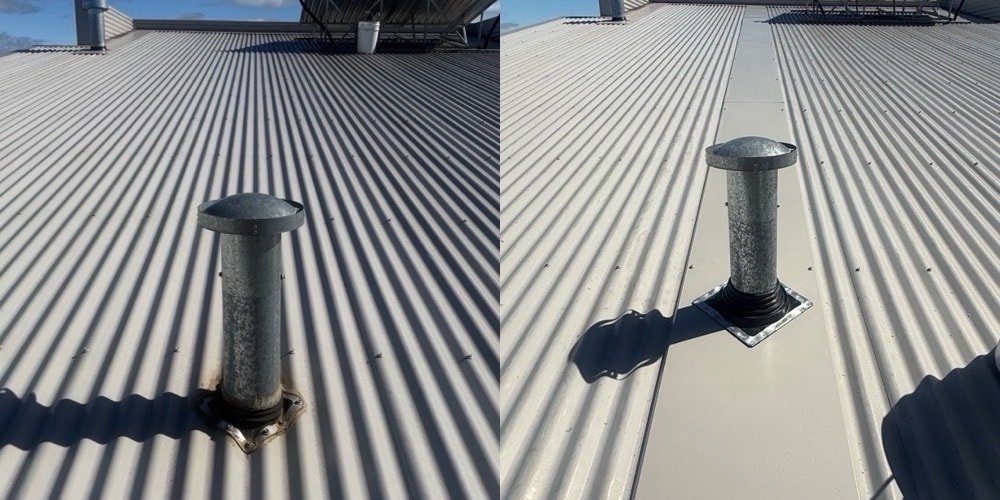
    • Damage around skylights, vents and solar panel mounts

    How Ridgepoint Roofing can help

    We can inspect your roof after a storm, make it watertight and supply photos and a written description of the damage, which you can pass on to your insurer. We then carry out the permanent repairs.

    See our emergency roof repairs and roof inspections, or call 0483 734 117.
  • 7 Signs Your Tile Roof Needs Re-bedding and Re-pointing

    7 Signs Your Tile Roof Needs Re-bedding and Re-pointing

    Many Canberra homes built between the 1960s and 1990s have concrete or terracotta tile roofs. The tiles themselves often last for decades, but the mortar that holds the ridge and hip capping in place doesn’t. When the bedding and pointing fail, water can get in along the ridge line — usually long before the tiles need replacing.

    Here’s how bedding and pointing work, why they fail, and the signs that yours need attention.

    What are bedding and pointing?

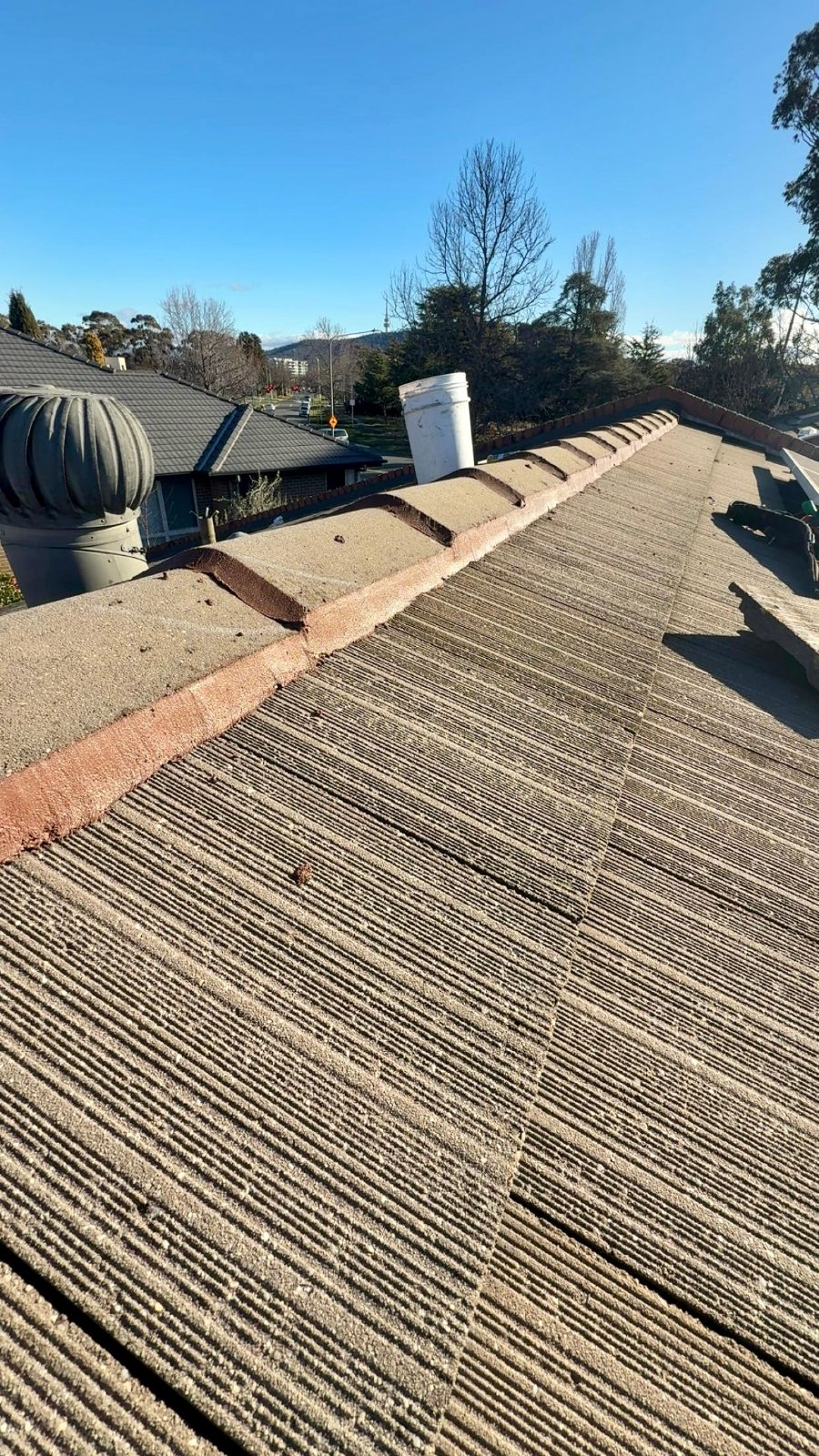
    Ridge capping tiles run along the peaks (ridges) and hips of a tile roof. They sit on a bed of mortar — the bedding — and the joint is sealed with a top layer called pointing.

    Older roofs typically used sand and cement mortar for both. Modern re-pointing generally uses a flexible pointing compound, which copes better with the roof’s natural expansion and contraction.

    Why Canberra roofs are hard on mortar

    Canberra swings from frosty winter mornings to hot summer afternoons. That constant heating and cooling makes a roof expand and contract, and over the years rigid cement mortar cracks and works loose. Summer storms, strong winds and hail add to the wear.

    7 signs your tile roof needs re-bedding or re-pointing

    1. Cracks in the pointing along ridges and hips — fine hairline cracks at first, then larger gaps.
    2. Pieces of mortar in your gutters, on paths or on the ground around the house.
    3. Ridge caps that look out of line, loose or uneven.
    4. Gaps between the ridge caps and the tiles below.
    5. Water stains on ceilings, especially along the line of a ridge or hip.
    6. Damp or musty smells in the roof space after rain.
    7. Birds or pests getting into the roof through gaps in old bedding.

    Please don’t climb onto the roof to check. Tiles break easily underfoot and roofs are dangerous, especially when wet. A pair of binoculars from the ground, or a look in the roof space with a torch, is a safer way to spot problems.

    Re-bedding or re-pointing — which do you need?

    If the bedding underneath is still solid and only the top layer of pointing has cracked, re-pointing alone may be enough. If the ridge caps are loose or the bedding has crumbled, the caps need to be lifted, the old mortar removed, and the caps re-bedded and then re-pointed.

    An inspection will tell you which applies to your roof, and whether any cracked tiles need replacing at the same time.

    Repair or replace the whole roof?

    For most tile roofs, re-bedding and re-pointing — along with replacing any broken tiles — is far cheaper than a full replacement and can keep the roof watertight for many more years. Replacement usually only makes sense when a large number of tiles are failing, the battens are deteriorating, or leaks keep appearing in different places.

    Get your ridge capping checked

    If you’ve noticed any of these signs, we can inspect your roof and show you photos of exactly what we find. Learn more about our tile roof repairs and roof inspections, or call 0483 734 117 for a free quote.